The Evolution of Continuous Real Wood Veneer Edgebanding

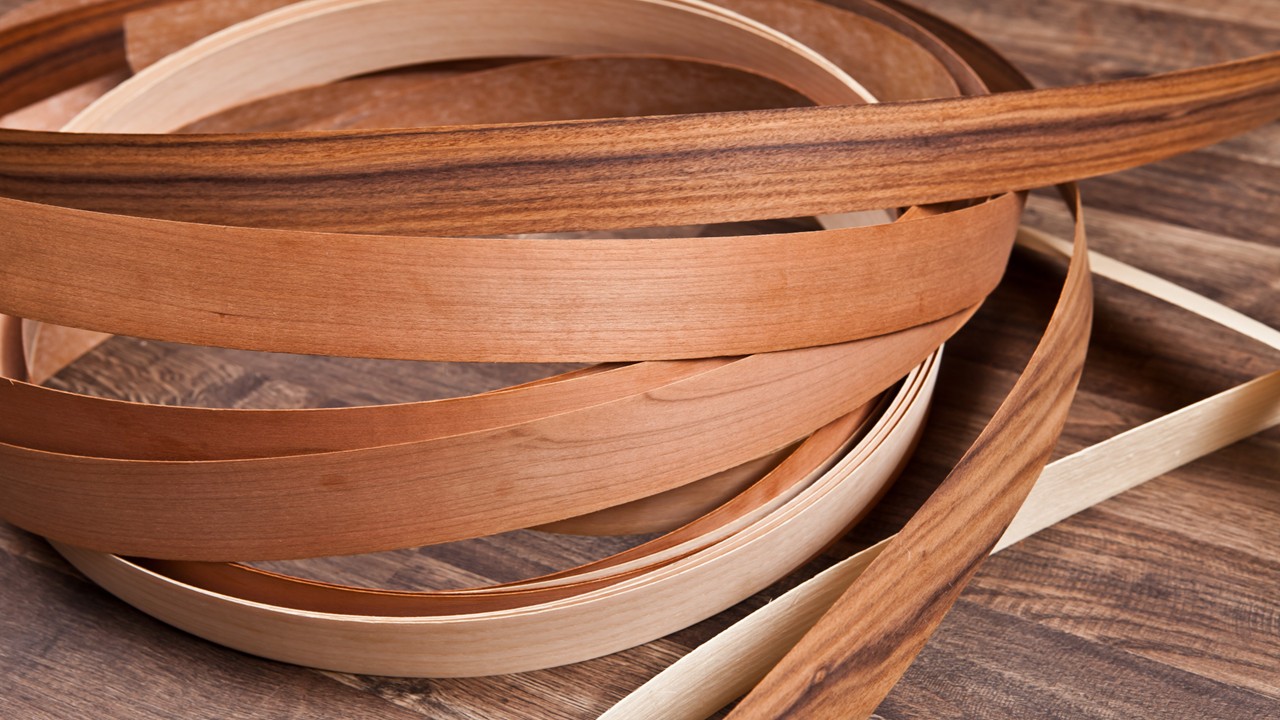
Real wood veneer edgebanding is one of the most essential components in modern woodworking and furniture manufacturing, offering both aesthetic appeal and structural integrity. While wood edgebanding in various forms has been around for centuries, the innovation of continuous veneer edgebanding rolls represents a major leap forward in production efficiency, sustainability, and performance.
In this post, we’ll explore how real wood continuous veneer edgebanding evolved—from its historical roots to today’s advanced manufacturing methods—and examine the many options available for woodworking professionals.
Origins: Post-War Efficiency Breeds Innovation
The modern form of veneer edgebanding traces its origins to post-World War II Europe, particularly Germany. During this time, raw materials were scarce, and the woodworking industry was under pressure to make the most out of limited resources.
Although veneer slicing techniques were evolving, the method of applying veneer still mimicked traditional solid wood edgebanding—cutting and gluing individual strips one at a time. This approach was labor-intensive and inefficient.
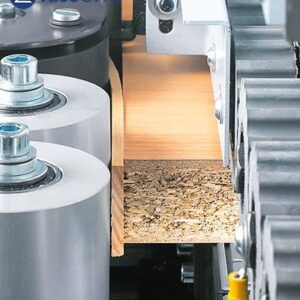
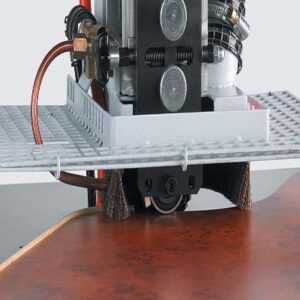
To solve this problem, German engineers in the early 1960s developed machinery capable of creating continuous rolls of real wood veneer. This development was spearheaded by companies like HOMAG, which introduced the first automatic edgebanding machine in 1962. The advancement significantly reduced labor costs and maximized material usage while maintaining the natural look of wood.
The Game Changer: Finger-Jointed Continuous Rolls
A key breakthrough in continuous veneer production was the development of finger-joint technology. Using specially designed cutting dies, thin veneers (typically 1/42” thick) were cut with interlocking finger joints. Alternating each piece end-to-end maintained consistent grain and color flow across the roll. A paper tape was applied over the joint to stabilize it during processing.
Benefits of Finger-Jointed Rolls
- Higher yield from shorter veneer lengths
- Reduced waste of raw wood
- Consistent appearance across long rolls
- More efficient production
Each bundle of veneer (often containing 24 pieces) could produce hundreds of linear feet of continuous edgebanding. The only noticeable grain or color change occurs during bundle transitions.

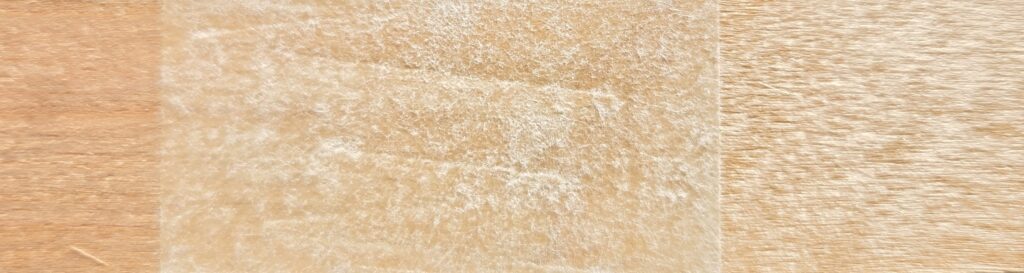
Alternating each piece end-to-end maintained consistent grain and color flow across the roll
Stabilizing the Material: Backing and Sanding
Thin veneers are fragile by nature. To make continuous rolls durable and machine-friendly, they are laminated with a backing material—typically PVA-impregnated fleece or lightweight paper—using a heated lamination process.
After backing, the material is sanded to a uniform thickness using a multi-head sanding line. A standard finish is 180-grit, which makes the veneer ready for finishing or adhesive application.

A PVA-impregnated fleece or lightweight paper is applied for durability and machinability.
Adhesive Application: Pre-Glued vs. Non-Glued Rolls
Once sanded and stabilized, the veneer rolls can be prepared in two main formats:
1. Pre-Glued (Iron-On):
- A hot-melt adhesive is applied to the back.
- Ideal for manual application using a heat source like an iron or heat bar.

A pre-applied hotmelt can be reactivated with an iron to make the edgebanding adhere to the panel.
2. Non-Glued (Automatic Edgebanding)
- Designed for automated edgebanders.
- Hot melt adhesive is applied to the substrate instead.
- Faster, cleaner, and more scalable for production environments.
The master veneer rolls are slit to required widths, similar to how masking tape is slit. Trimming tolerances typically range from 1/16” (pre-glued) to 1/8–1/4” (non-glued).

Non-Glued edgebanding is applied on edgebanders with hotmelt adhesive for a strong bond to plywood, MDF, or melamine boards.
Fixed-Length Joints: Precision Applications
While most continuous rolls feature randomly sized finger joints, fixed-length joints (either finger or butt joints) can be produced for precision applications—such as door and window frames—where joint visibility must be eliminated.
These are typically custom-ordered products and can meet specific dimensional requirements.
Prefinished Continuous Veneer Rolls
With the rise of prefinished plywood and panel products, the need for prefinished edgebanding became apparent.
Manufacturers now offer real wood veneer rolls that are UV-cured and sealed before slitting. These rolls are:
- Finish-ready
- Time-saving
- Available clear-coated (with some stained options)
This eliminates the need for finishing after application, particularly useful in cabinetry and modular furniture manufacturing.

Prefinished edgebanding is a ready-to-use solution that offers time savings in furniture construction.
Thicker Continuous Veneer Rolls: 1mm to 3mm
By the late 1980s, producers developed technology to laminate multiple layers of veneer into thicker rolls, commonly available in 1mm, 1.5mm, 2mm, and 3mm. These thicker edgebanding products require:
- Specialized heavy-duty lamination
- Robust slitting or sawing equipment
While these can also be prefinished, most 2mm and 3mm products are left unfinished because trimming during application exposes fresh veneer edges.
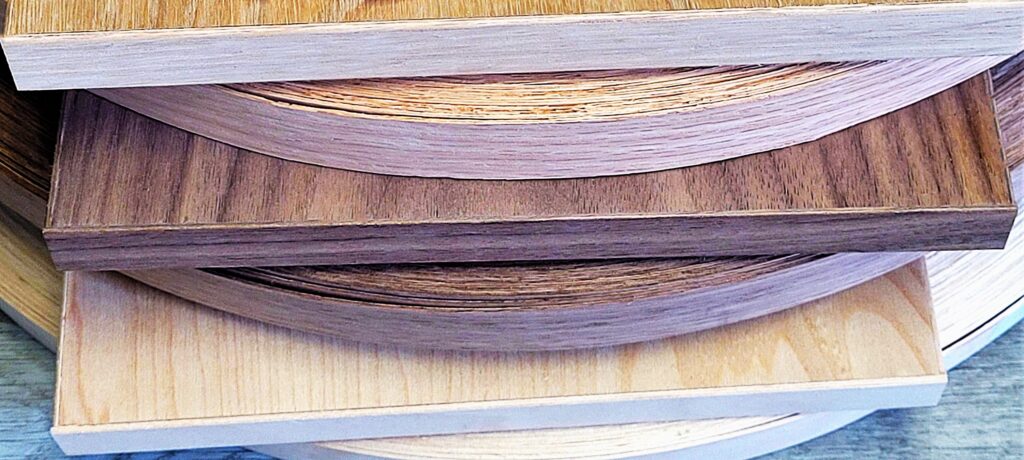
Thick veneer edgebanding provides rounded edges and corners and higher impact resistance than thinner edgebanding.
Important: Moisture Control
Thicker veneer is more sensitive to environmental conditions. To avoid cracking or splintering:
- Store in climate-controlled environments
- Maintain 60–70% humidity
- Use within a few weeks of manufacture
Final Thoughts: Why Continuous Real Wood Edgebanding Matters
The development of continuous real wood veneer edgebanding has transformed the woodworking industry. It offers:
- Greater material efficiency
- Reduced labor and cost
- Consistent aesthetic quality
- Expanded finishing and thickness options
Whether you’re building cabinets, architectural millwork, or fine furniture, continuous veneer rolls provide an efficient, scalable, and visually seamless solution.
As machinery continues to evolve and new finishes are developed, we can expect even more refinements in real wood edgebanding—offering unmatched flexibility without compromising the beauty of natural wood.
Author: Loren Brandt, Owner of Brandt International Sales LLC.